When modern culture imagines a disaster, it defaults to cinematic spectacle: abandoned interstate highways, roving militias, and five-figure stockpiles of tactical nylon. We have been systematically conditioned to believe that readiness requires militarized paranoia and an endless budget for specialized survival gear.
Yet in the real world, emergencies rarely resemble Hollywood scripts.
Real crises arrive silently, directly within your domestic perimeter. At two o’clock on a freezing Tuesday morning, a pressurized copper pipe shears in your crawlspace, dumping fifty gallons of water per minute across structural framing. During an ice gale, a regional transmission line snaps, dropping grid power and municipal heat across three counties. Or a wind-driven oak limb punches cleanly through your roof decking.
What happens inside the typical family home during these sudden utility collapses?
Shouting. Running in circles. Dead phone batteries. Misplaced tools. Immediate cognitive paralysis.
The human brain, hijacked by acute stress, floods the bloodstream with cortisol and norepinephrine. Peripheral vision contracts into severe tunnel vision, executive planning shuts down completely, and routine domestic repairs transform into genuine physical hazards.
Panic is not readiness; hysteria burns through mental fuel before a single valve is turned.
To build an unbreakable domestic sanctuary, we must discard media-fueled survival myths and examine the oldest, most battle-tested survivors on earth: the natural biological world.
The Biological Reality: Why Domestic Multitasking Collapses
Under acute environmental shock, human physiology defaults to the sympathetic “fight-or-flight” state. While effective for escaping apex predators, this ancient neurochemical cascade is disastrous for domestic troubleshooting.
[Domestic Threat: Pipe Burst / Blackout]
│
▼
[Sympathetic Surge: Cortisol & Adrenaline]
│
▼
[Executive Prefrontal Cortex Shuts Down]
│
▼
[Tunnel Vision + Non-Sequential Multitasking]
│
▼
[Exhaustion, Family Arguments, Compounded Property Damage]
When stress hormones surge, the brain loses the capacity for fine motor precision and sequential logic. Attempting to calm a crying child, locate an emergency wrench, find candles, and dam a wall of water simultaneously guarantees exhaustion and injury.
Nature operates on an entirely different operating system: absolute poise, ruthless caloric conservation, and frictionless adaptation.
The Nature vs. Panic Matrix
The following matrix contrasts standard reactive human failure modes against proven biological equilibrium:
| Domestic Hazard | Typical Human Failure (The Panic Response) | Nature’s Operating Law | Redwood Action Protocol |
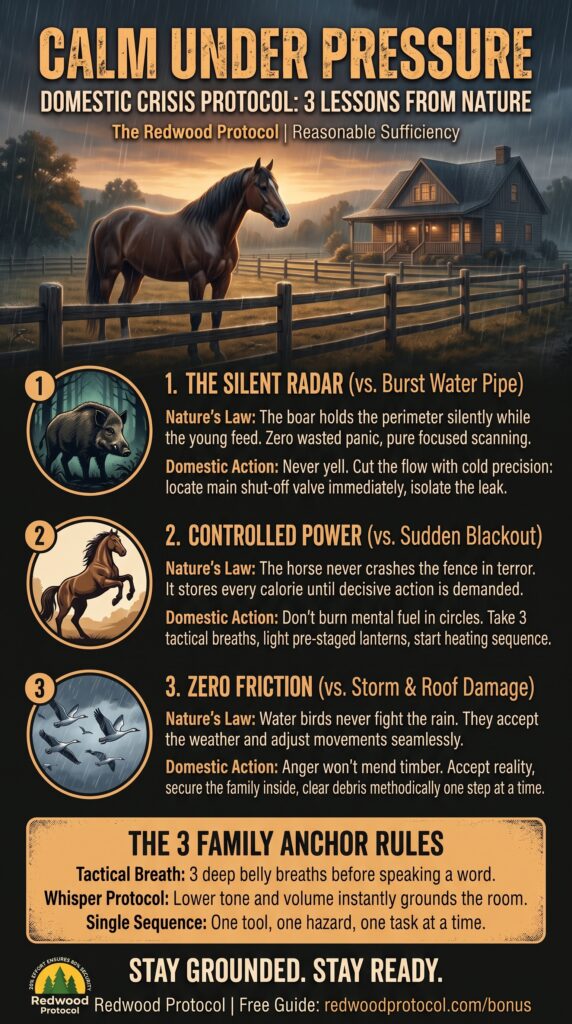
| Pressurized Pipe Burst | Screaming orders, slipping on wet tiles, scrambling for towels while gallons flood subflooring. | The 360° Silent Radar (Wild sow with piglets): Zero erratic motion. Complete sensory scanning while offspring feed quietly. | Silence in the Home. Steady, deliberate stride. Immediate isolation of the main water shut-off valve before touching a towel. |
| Mid-Winter Grid Blackout | Anxious pacing, domestic arguments, burning phone batteries refreshing local power maps. | Controlled Muscular Power (Stallion in storm paddock): Refusal to crash fences in fear; saving every calorie until action is demanded. | Energy Conservation. Cease pacing. Ignite pre-staged LED lanterns, seal interior doorways to defend thermal zones, verify dry pantry stores. |
| Structural Wind Damage | Emotional rage, cursing the weather, dangerous attempts to fix tarps in gale-force winds. | Frictionless Adaptation (Waterfowl in rainstorm): Zero emotional resistance to rain; biomechanics adapt smoothly to wet stone. | Immediate Baseline Acceptance. The roof is damaged; anger changes nothing. Move family to interior core rooms; secure debris step by step. |
The Three Family Anchor Rules
Converting biological poise into domestic reality requires actionable, repeatable drills. When household alarms trigger, execute the Three Family Anchor Rules:
1. The Tactical Breath Pause (Neurological Reset)
When utility failures strike, freeze completely for ten seconds. Do not speak. Take three slow, deep diaphragmatic breaths through your nose, expanding your lower abdomen, followed by extended exhalations.
- The Science: Diaphragmatic breathing mechanically stimulates the vagus nerve (nervus vagus), releasing acetylcholine, slowing runaway heart rates, and re-engaging the prefrontal cortex for executive problem-solving.
2. The Whisper Protocol (Halting Emotional Contagion)
Deliberately reduce your speaking volume and lower your vocal register by twenty percent.
- The Science: Spouses and children do not follow spoken logic during a crisis; they mirror mirror-neuron physiological cues. High-pitched, erratic voices accelerate collective hysteria. A low-frequency, calm voice physically forces the room to quiet down and listen.
3. The Single Sequence (One Threat, One Tool)
Reject multi-tasking completely. Operate under the strict rule: One Hazard. One Tool. One Physical Action at a Time.
- Step A (Primary Isolation): Cut off the damage source (turn the main water valve, flip the main electrical breaker).
- Step B (Family Stabilization): Secure warmth, light, and drinking water in a controlled interior room.
- Step C (Methodical Remediation): Only after the threat is neutralised and the family is calm do you begin structural cleanup.
Reasonable Sufficiency: Why Preparedness Eradicates Fear
Poise under pressure is not an innate personality trait; it is a physical habit anchored in prior structural certainty.
When your basement water valve has a clearly labeled tactile tag, when high-lumen LED lanterns sit in designated wall brackets, and when living microgreen sprouting jars quietly produce daily vitamins on your counter without grid power, subconscious dread dissolves.
Twenty percent of disciplined, foundational habits guarantee eighty percent of your family’s real-world security.
Next Step: Access the Official Tactical Blueprints
Stop spending thousands on tactical survival gimmicks designed for fantasy scenarios. Master practical domestic autonomy, rational food reserves, and home defense protocols with our free training guide.
Save this quick-reference infographic to your phone for offline kitchen use: